

Almudena Day 2026: The Legend, the Procession and the Pastry You Need to Try

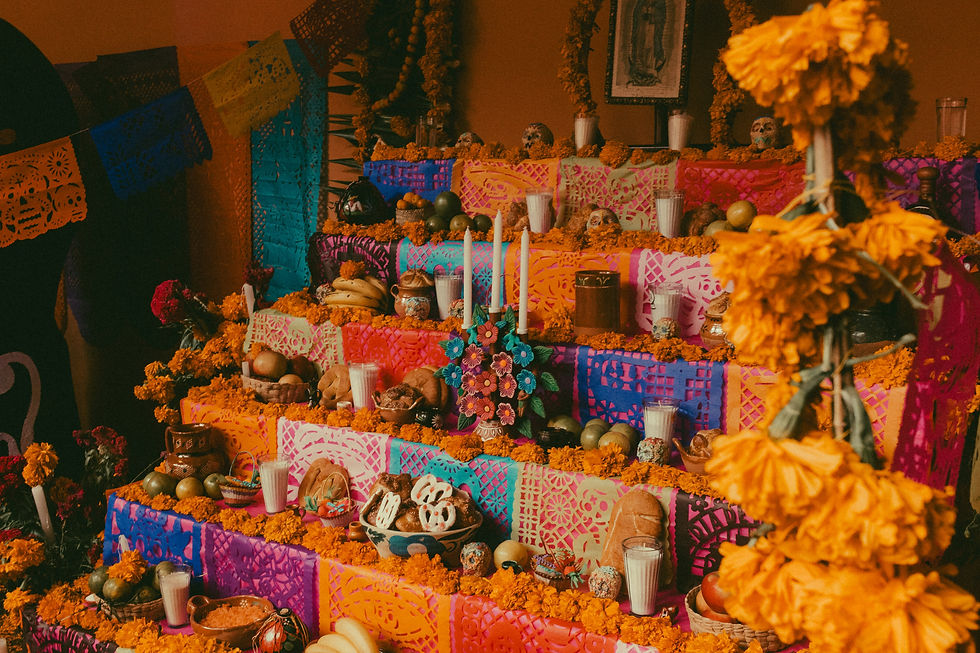
Photo: Hernan Gonzalez on Unsplash
Every November 9th, Madrid pauses to honor its patron saint: the Virgin of Almudena. In 2026 the date falls on a Monday, so don't expect a long weekend — but you can expect a full day of processions, crowds in the old town, and a pastry that only exists one weekend a year. You don't need to plan much in advance: just be in the city center that morning and let yourself be carried along by the atmosphere.
If you happen to be in the city in early November, this feast is worth building into your plans even if you're not religious at all. The legend behind the name "Almudena" explains why Madrid is called what it's called, the procession literally walks through the historic center, and the Corona de la Almudena is the kind of seasonal treat locals genuinely queue for.
This guide covers the origin of the devotion, the official 2026 program, where to try the crown-shaped pastry, and how to turn the visit into a full afternoon of history and tapas around the Austrias quarter.
The Legend of Almudena: From an Arab Wall to the Miracle of 1085
"Almudena" isn't a surname or a random place name — it comes from the Arabic al-mudayna, roughly "the citadel" or "the fortified enclosure." It refers directly to the wall that surrounded 9th-century Muslim Madrid, then known as Mayrit.
Mayrit, the city's Arabic name, roughly means "place of many waters," a reference to the underground channels that supplied the fortress. Almudena, with its walls and over a hundred defensive towers, was back then little more than a small frontier stronghold, still far from becoming any kind of capital.
According to legend, when the city fell under Islamic rule, local Christians hid a statue of the Virgin inside one of the wall's towers to protect it. Tradition says the image stayed hidden for more than three centuries, alongside two candles that, miraculously, never went out.
💡 Fun fact: the legend doesn't describe a church or an altar — just a gap inside the city's defensive wall. That's literally why Madrid's patroness carries the name of an Arabic fortification.
Everything changed in 1085, when King Alfonso VI reconquered Madrid. Tradition holds he ordered prayers to locate the lost image. Days later, a section of the wall reportedly collapsed on its own, revealing the statue intact — the two candles still burning. The discovery was considered miraculous and popular devotion spread almost immediately.
The original wooden sculpture was lost in a 15th-century fire. The image venerated today — dressed in embroidered robes and crowned with gold and gemstones — is a later work, possibly linked to painter Juan de Borgoña, created between the 15th and early 16th centuries.
November 9th doesn't mark the fire or the newer sculpture — it marks the legendary discovery date of 1085. The feast itself, though, is more recent than it looks: it wasn't until 1908 that Pope Pius X officially proclaimed the Virgin of Almudena as Madrid's patron saint, fixing this date as the official celebration.
If you want to dig into the architecture of the cathedral where the image is venerated today, we've already covered La Almudena Cathedral in its own post — this guide focuses on the feast itself, not the building.
The 2026 Program: Triduum, Mass and Procession
Madrid's archdiocese organizes a multi-day program around November 9th every year. This edition's motto is "Pilgrims of Hope," and while the exact schedule can shift slightly at the last minute, the overall structure repeats year after year.
In the days before (usually November 5-7), the triduum takes place at the Cathedral of Santa María la Real de la Almudena, with an evening mass each day. In parallel, floral offerings are organized on the Almudena esplanade, open to schools and the general public alike.
The weekend before the main day adds more events: a floral offering by Armed Forces veterans, choir concerts inside the cathedral, and a youth vigil usually livestreamed online. Saturday afternoon brings a smaller procession from the cathedral to Plaza de la Villa.
Sunday, November 9th is the main event: the Solemn Mass, presided over by Madrid's cardinal archbishop, takes place at 11:00 AM on the Almudena esplanade and is broadcast by Telemadrid and COPE radio. Right after, the procession departs from there and walks through Mayor, Santiago and Requena streets — straight through the heart of the Austrias quarter.
Moment | Approximate date | Location |
Triduum (evening masses) | Nov 5-7 | Almudena Cathedral |
Floral offering & vigil | Nov 7-8 | Almudena esplanade |
Solemn Mass | Nov 9, 11:00 AM | Almudena esplanade |
Procession | Nov 9, after mass | Mayor, Santiago & Requena streets |
Throughout Sunday, music fills the area: bagpipers and traditional instruments play along Paseo del Prado in the late morning, and Madrid folk groups perform in Plaza Mayor well into the afternoon.
📌 Local tip: if you want a clear view of the procession without the crowds, Calle Mayor near Plaza de la Villa is usually less packed than the cathedral esplanade itself.
If it rains or turns cold — not unusual in Madrid in early November — the religious events go ahead regardless; bring an umbrella and layers, since both the mass and the procession happen outdoors no matter the weather.
The easiest metro stop is Ópera (lines 2, 5 and R), about a five-minute walk from the cathedral.
Corona de la Almudena: The Pastry You Can Only Get One Weekend a Year
If there's one food-driven reason to care about this feast, it's the Corona de la Almudena. It's a variation of the classic roscón de Reyes (Three Kings' cake), created in the 1970s as a tribute to Madrid's patron saint — and unlike the Christmas version, it's only baked and sold around November 9th.
The crown-shaped pastry is round, topped with sugar and almonds or candied fruit, and filled with whipped cream or pastry cream, just like a traditional roscón. The main difference is timing: miss this weekend, and you'll wait almost two months until Christmas for anything similar.
Every year, Madrid's association of artisan bakeries organizes a charity giveaway of thousands of slices in Plaza Mayor, usually starting around 12:30 PM on November 9th itself, cut from a giant crown weighing several hundred kilos.
If you'd rather buy one calmly and take it home, several historic bakeries in the center make it to order during these days:
Confitería El Riojano (Calle Mayor) — one of Madrid's oldest pastry shops, with nearly 150 years of history.
Formentor — a classic of Madrid pastry-making, with several locations downtown.
Pastelería Mifer — specializes in seasonal roscones and coronas.
💡 Fun fact: the Corona de la Almudena is essentially an "off-season" roscón de Reyes — same filling, same shape, but designed specifically as a sweet tribute to the city's patron saint rather than a Christmas dessert.
Some years, the crown handed out in Plaza Mayor has weighed over 300 kilos — a genuine feat of collective baking that several downtown bakeries prepare together in the days beforehand.
Grabbing a free slice at the Plaza Mayor giveaway depends on arriving early: lines form well in advance, and while portions are generous, they're not unlimited. If you'd rather skip the queue, buying one at a bakery is the safer bet.
What to See Next: The Crypt and a Tapas Route Through the Austrias Quarter
Make the most of being in the area and extend your visit beyond the mass and the procession. Right beneath the cathedral sits the Almudena Crypt, with over 400 columns, each topped with a different capital carved with biblical scenes and natural motifs. It's the largest crypt in Spain and also serves as a burial site for several noble families.
The crypt is open daily from 10:00 AM to 2:00 PM and 4:30 PM to 8:00 PM, with a free audio guide in Spanish, English, French and German. General admission asks for a €1 donation, and guided tours cost €4 per person — a symbolic price for 400 columns and 20 chapels.
Step outside and you're right in the middle of Madrid de los Austrias, the same quarter the procession walks through. A few steps away on Calle Mayor, one of the city's oldest taverns is still going strong: Casa Ciriaco, known for its traditional Madrid-style tripe and century-old atmosphere — a perfect spot to sit down with a real appetite after mass.
Plaza de la Villa itself, where Saturday's smaller procession passes through, was for centuries the seat of Madrid's city government: its Gothic and Renaissance buildings — Casa de Cisneros and Casa de la Villa — have stood there since the 16th century, long before the city became a capital at all.
📌 Local tip: if you enjoyed exploring this neighborhood, we've already written full routes through its centennial taverns and its hidden medieval past — both pair naturally with Almudena Day.
Fancy exploring Madrid de los Austrias with a local guide? Our Cul.Tour Madrid: Famous Landmarks Walking Tour covers exactly this stretch of the old town, between the cathedral and Plaza Mayor.
Frequently Asked Questions About Almudena Day
When is Almudena Day in 2026? The main day is Monday, November 9, 2026, with earlier events starting November 5 (triduum) and the preceding weekend (floral offerings and vigil).
Is watching the procession free? Yes — both the mass on the Almudena esplanade and the procession through Mayor, Santiago and Requena streets are public, free events open to anyone.
Where can I try the Corona de la Almudena? The charity giveaway in Plaza Mayor (usually from 12:30 PM on November 9) is free while the giant crown lasts. To buy one without queuing, bakeries like El Riojano, Formentor or Mifer make it to order those days.
Can I visit the cathedral that same day? Yes, though keep in mind that during the solemn mass and procession, access may be affected by capacity limits and occasional pedestrian route closures around the esplanade.
Is there anything special for kids? There's no dedicated children's programming, but the street music, parades and the pastry giveaway in Plaza Mayor tend to go down well with families too.
Between the legend of the Arab wall, a mass with centuries of history behind it, and a pastry that disappears until next year, Almudena Day is one of those dates that explains Madrid better than almost anything else. If you'll be in the city on November 9th, plan the morning without rushing: mass, procession, a slice of crown pastry, and to close the day, a tapas route through the very neighborhood you just walked.
Would rather have someone walk you through it? Our City Walking Tour passes right through these streets, from the cathedral to Plaza Mayor.


Comments